
Sedona through the Ages – A Brief History of the Red Rocks Community
Long before Sedona became one of Arizona’s most iconic tourism destinations the area’s story began thousands of years ago with the Native American tribes who first called this red rock landscape home.
Ancient Roots
Archaeological evidence suggests that the Sinagua people inhabited the Sedona region as early as 600 CE. These early agriculturalists built cliff dwellings, developed irrigation systems, and cultivated crops such as corn and squash in the fertile soil near Oak Creek. Remnants of their civilization can still be seen at nearby heritage sites such as Palatki and Honanki, where ancient rock art and dwellings offer a glimpse into daily life in the Verde Valley centuries ago.
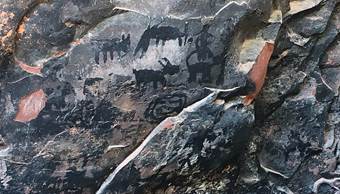
Palatki Heritage Site Rock Art – Photo courtesy of tripadvisor.com
Following the departure of the Sinagua around 1400 CE, the area was used seasonally by the Yavapai and Apache peoples for hunting and gathering. Their deep cultural connection to the land continues today and remains an important part of Sedona’s living history.
Settlement and the Founding of Sedona
European-American settlement in the Sedona area began in the late 1800s, when homesteaders were drawn by the promise of fertile land along Oak Creek and a mild year-round climate. One of the earliest settlers was Theodore Schnebly, who arrived with his wife, Sedona, in the early 1900s. When it came time to apply for a post office in 1902, the town adopted the name “Sedona” after Schnebly’s wife—reportedly because it was short, easy to spell, and unlike any other town name in the territory.
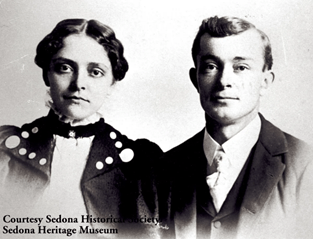
Theodore and Sedona Schnebly – Photo courtesy of Sedona Historic Society, Sedona Heritage Museum
In its early years, Sedona was a remote ranching and farming community. Orchards, cattle operations, and small family farms dotted the landscape, and access to the outside world was limited to rough wagon roads that wound through Oak Creek Canyon.
Hollywood Comes to the Red Rocks
Sedona’s dramatic scenery began attracting national attention in the 1940s and 1950s, when Hollywood filmmakers discovered that its red rock formations provided the perfect backdrop for Western films. Classics such as Broken Arrow, Johnny Guitar, and Angel and the Badman were filmed in and around Sedona, helping to put the small desert town on the map.
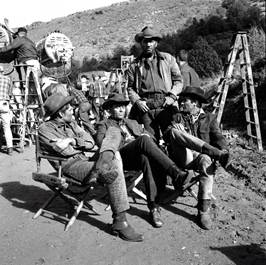
Gary Lockwood, Henry Fonda, Morgan Woodward, (standing), and Jim Best enjoyed a break in the rain during shooting of the 1968 film ‘Firecreek’ on Schnebly Hill. Photo courtesy of azmemory.azlibrary.gov
This influx of film crews and visitors marked the beginning of Sedona’s transformation from an isolated agricultural outpost into a destination for artists, adventurers, and travelers seeking the beauty of the American Southwest.
Arts, Spirituality, and Modern Tourism
By the 1960s and 1970s, Sedona had begun attracting painters, sculptors, and writers inspired by the area’s natural beauty. The development of Tlaquepaque Arts and Crafts Village in the 1970s cemented Sedona’s reputation as a thriving arts community.
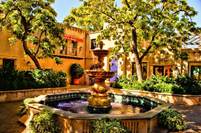
The Tlaquepaque Arts & Crafts Village has attracted artists for the past 50+ years. Photo courtesy of Pixels.com by Jon Berghoff
In the decades that followed, Sedona also gained recognition for its association with energy vortex sites—locations believed by some to possess heightened spiritual or meditative qualities. Today, visitors come from around the world not only for hiking and scenic drives, but also for wellness retreats, meditation experiences, and holistic healing practices.
Preserving the Past While Welcoming the Future
While tourism now serves as the backbone of Sedona’s economy, local leaders and conservation groups have worked to preserve the area’s natural and cultural heritage. Land-use planning, environmental protections, and partnerships with the U.S. Forest Service have helped maintain the balance between growth and preservation.
From ancient cliff dwellings to modern art galleries, Sedona’s story is one of adaptation and stewardship—where history and hospitality come together beneath the timeless red rock skies of the Verde Valley. To learn more, stop by the Sedona Heritage Museum at 735 Jordan Road in Sedona.
 The Verde Valley Current
Leave a comment