
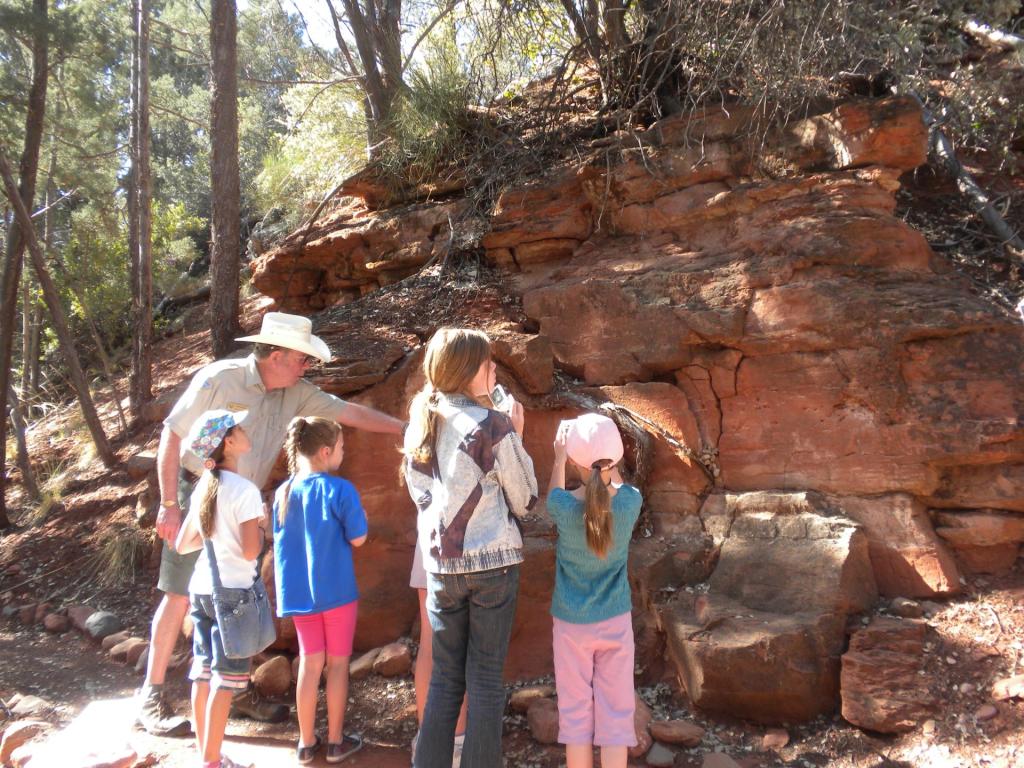
An educational moment with a park ranger and children – Photo courtesy of the City of Sedona
Long before visitors arrive in the Verde Valley, someone is already there.
At sunrise, a ranger checks a trailhead sign after a windy night. Along the Verde River, a steward pauses to answer a question about water access. At a national monument, an interpreter prepares to greet the day’s first visitors with stories that stretch back thousands of years. These moments rarely make the itinerary, yet they shape nearly every visitor experience in this remarkably layered landscape.
The Verde Valley is home to an unusual concentration of protected lands—national monuments, national forests, state parks, river corridors, wilderness areas, and municipal preserves—all managed by different agencies with a shared goal: protecting fragile environments while welcoming people eager to explore them.
A landscape with many guardians
Unlike destinations governed by a single park authority, the Verde Valley is cared for by a mosaic of land managers. The National Park Service preserves irreplaceable cultural sites like Montezuma Castle, Montezuma Wells, and Tuzigoot. The Coconino National Forest, including the Red Rock Ranger District, manages vast trail networks, canyon corridors, and scenic overlooks. Prescott National Forest protects western foothills and high-country ecosystems. Arizona State Parks, including Red Rock State Park, Slide Rock State Park, Fort Verde State Historic Park, and Dead Horse Ranch State Park, balance recreation with conservation along the Verde River.
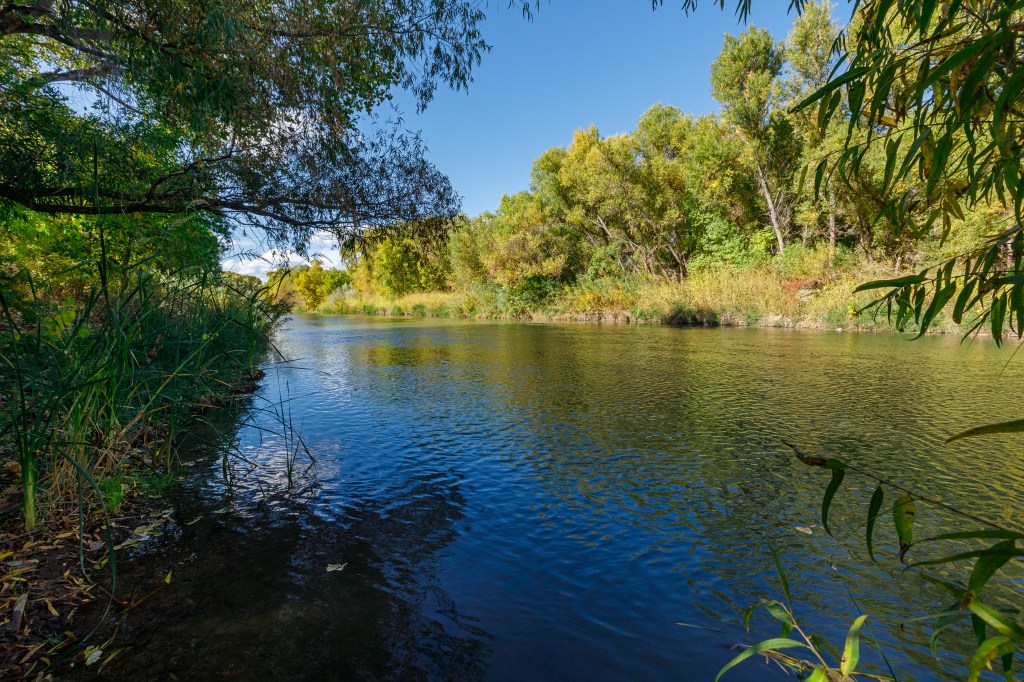
The Verde River at Rockin’ River State Park near Camp Verde – Photo Courtesy of Arizona State Parks
“Slip, Slidin’ Away” on nature’s slide at Slide Rock State Park near Sedona – Courtesy of https://perfectlittleplanet.com/
Add Bureau of Land Management lands, municipal trail systems, community preserves, and nonprofit-supported conservation areas, and it becomes clear why visitors encounter a wide range of experiences—from well-developed trailheads to quiet backcountry access points. The diversity is intentional, and it’s part of what makes the region so appealing.
The people behind the places
Behind every overlook, river access point, and interpretive sign is a team of professionals and volunteers whose work extends far beyond enforcement. Rangers, maintenance crews, visitor center staff, interpretive specialists, river stewards, and seasonal employees all play a role in keeping these places accessible and safe.
Much of their work is educational. Helping visitors understand why trails stay open—or sometimes close. Explaining how to enjoy the river while protecting sensitive riparian habitat. Offering guidance on weather, wildlife, and terrain that can change quickly in high desert environments.
Welcoming visitors in a challenging moment
In recent years, Verde Valley parks have experienced increased visitation while operating under tighter budgets and staffing constraints. Rather than limiting access, many park teams have responded with creativity—using better signage, improved visitor education, and partnerships with local communities.
How visitors become part of the solution
Visitors don’t need special training to support these efforts—just awareness. Staying on designated trails, respecting closures, packing out trash, and following river guidelines all make a difference.
Volunteers share stewardship for a trash clean up event – Photo courtesy of “Friends of the River”

A shared responsibility—and a shared reward
The Verde Valley’s parks feel timeless, but their care is anything but automatic. Each day, dedicated teams work quietly to protect ancient sites, restore natural systems, and welcome visitors into landscapes that inspire awe and respect.
SIDEBAR: Know Before You Go – Park-Friendly Travel Tips
• Stay on marked trails and respect posted closures
• Follow river access and recreation guidelines
• Pack out trash and food waste
• Ask rangers and staff for local guidance
• Consider purchasing passes or donating to park partners
 The Verde Valley Current
Leave a comment